It's in my blood.
Since I was given my first camera, when I was a little kid, I have always been fascinated by capturing in a shot what my eyes were seeing around me. The beauty of nature or the smile of a friend, an event or an emotion... Precious pearls to be framed in a photo. Whether freezing a movement or moving the stillness, looking at normality through a different angle or portraying the exceptional, I can choose different perspectives, I can catch reality. I think this passion is in my blood, I inherited it from my Grandpa and then from my Dad, and it has always had a great influence in my life. Come and follow me in my journey searching impressions of life.


Showing posts with label water. Show all posts

Sunday, April 16, 2017

The King

The Kingfisher, a blue rocket that dives at incredible speed and precision to catch the fish. This beautiful bird is not rare but being able to see it fishing is not that easy, especially considering its speed. I have seen this bird diving from the top of a big tree, 15 meters high, into a small pond and still catch the fish, of course all in a flash.

Taking pictures of the Kingfisher is great: the shape and colors of this bird make it a perfect subject for a nature photographer. However, even if a portrait shot is already a great picture – considering the beauty of this bird – taking a shot in flight is the ultimate goal of every photographer. And considering the speed of the Kingfisher, that is no easy task. So... of course I tried to do that.

Because of how fast it is, the camera must be set on a very fast shutter time – to be sure to freeze the bird's flight 1/3500-1/4000 sec is recommended – and it must be pre-focused on the spot where we think (or hope) the bird will dive. Autofocus would be really tough and all the water drops would anyway fool the lens view and make the camera focus off the real subject. The fast shutter time often prevents the photographer from being able to use a small aperture and depth of field is critical, especially when using a telephoto.

Here are my first results in this attempt of taking a good photo of the Kingfisher either diving or emerging from the water with the catch. The light was not that much, and to try and have a good depth of field I had to raise the ISO quite a bit. I even risked lowering the speed to a value, still pretty fast, but not completely safe. However, the fact that I took the bird while exiting the water, allowed for shots with no motion blur because the bird was slowed down by the fish and by the effort of flying out of the water.

They are not perfect, but I am pretty satisfied at the moment. And of course I will try again, looking for the perfect shot... wish me luck!


               350mm f/8.0 1/1250sec ISO6400 -0.33


               350mm f/8.0 1/1250sec ISO6400 -0.33


               350mm f/8.0 1/1250sec ISO16000 -0.33


               350mm f/8.0 1/1250sec ISO16000 -0.33


               350mm f/8.0 1/1250sec ISO16000 -0.33


Monday, March 28, 2016

Dinner with the Long-billed Curlew

Browsing through some of my folders, I found some photos taken a couple of years ago at the Bolsa Chica Wetland Preserve, in California.
That day, I went to the wetlands around sunset, hoping to take some good shots of the many birds that can be found there. Sunset is a beautiful moment because of the light, the colors and it looks like many birds fish at that time of the day.

During my previous visit, I only had a quick glimpse of the Long-billed curlew, and that was certainly one of the birds that I was hoping to see. And this time I was lucky enough to spend quite some time with this one bird.


               560mm f/6.3 1/1250sec ISO640


               560mm f/6.3 1/1600sec ISO640


               560mm f/6.3 1/3200sec ISO1000 +0.33


               560mm f/6.3 1/1250sec ISO640


               560mm f/8.0 1/1600sec ISO800 +0.33


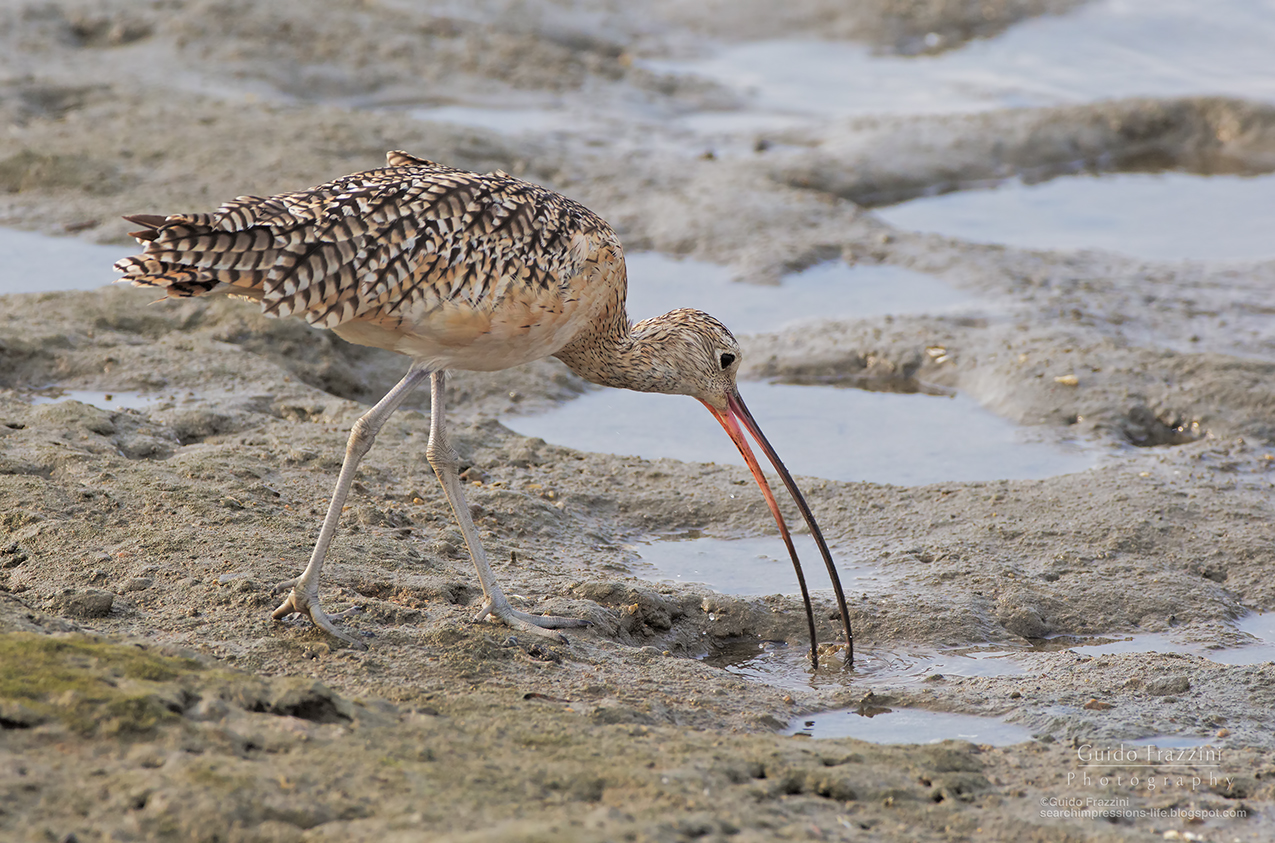
I had the opportunity to see it looking for food and capturing some crabs. The bird uses the very long and curved bill to probe the muddy ground close to the water to find crabs and small invertebrates. He also captures grasshoppers and other insects.

It was incredible to see the curlew turning its neck 180 degrees while trying to extract a crab from the mud, adjusting the proper curved side of the long bill to the situation: It really looked like a contortionist.

               560mm f/6.3 1/1250sec ISO1000 +0.33


               560mm f/8.0 1/800sec ISO800 +0.33


 Here a funny shot when the crab realizes that it's been discovered... It looks like it's saying: "Don't think it's going to be easy, man! I am not going down without a fight!" It's almost like having two knights fighting in a duel... who is going to win?

               560mm f/7.1 1/1000sec ISO640


But nothing could be easier for the long-billed curlew. Even though the crab is not a very small one, the long bill is a formidable weapon that the bird uses with incredible expertise.

               560mm f/7.1 1/1000sec ISO640


With a one-two move, the crab is made harmless. And after capturing it, there was certainly the need of washing the food before eating it! I was surprised to see the bird going to the water and letting the crab fall into it, just to immediately capture it again to wash all the mud off of it. The curlew was incredibly skilled in "handling" the crab with the bill, making it jump in mid-air to get it again in the correct position.

               560mm f/6.3 1/1600sec ISO640


               560mm f/7.1 1/1250sec ISO640


               560mm f/6.3 1/3200sec ISO1000 +0.33


               560mm f/8.0 1/1250sec ISO800 +0.33


Well, no more crabs... dinner time was finished for the day.

               560mm f/8.0 1/1250sec ISO800 +0.33


               560mm f/6.3 1/2000sec ISO640


               560mm f/6.3 1/2000sec ISO640


               400mm f/8.0 1/1600sec ISO800 +0.33


               400mm f/8.0 1/1250sec ISO800 +0.33


And after so much hard work, and a great dinner, finally some relaxation, getting ready to go to bed.

               400mm f/8.0 1/1600sec ISO800 +0.33


Sunday, May 3, 2015

The Great Crested Grebe

The photos you see in this post have been shot either last year or this past April. Though I have not been successful in my goal to get very good photographs of the whole courtship dance, I got a few shots that I want to share while hoping to get better ones in the future. And anyway, mating ceremonies apart, I think this is a beautiful bird, especially when it changes his aspect during the good season.

The Great Crested Grebe, in fact, has a wonderful plumage in the summer, with head and neck "decorations" that during the courtship are displayed in full.


             800mm (400mm + 2x) f/8.0 1/500sec ISO 800 +1.33


             800mm (400mm + 2x) f/11.0 1/400sec ISO 800 +1.33


             840mm (600mm + 1.4x) f/6.3 1/800sec ISO 500 +1


             600mm f/7.1 1/1000sec ISO 400 +0.33


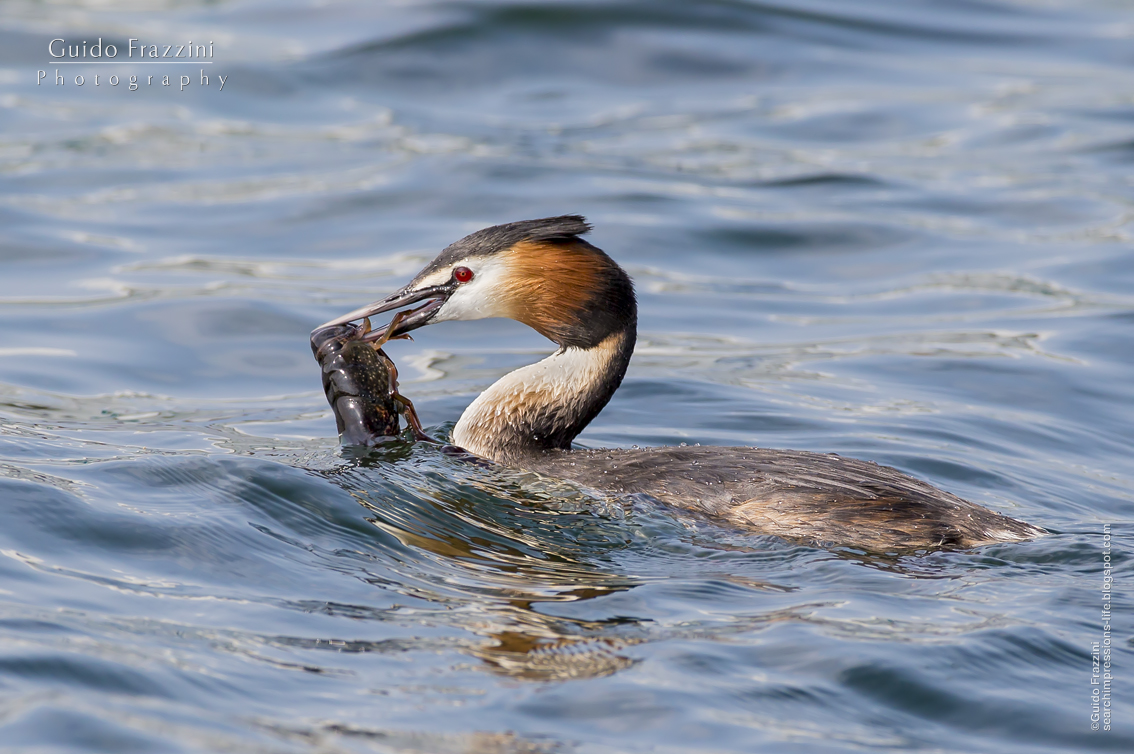
They eat fish, but also crustaceans, frogs and insects. The specimen I observed last year were feeding a lot on lake prawns. They often rest, sleeping with their head kind of hidden in the plumage or stretching their legs that are positioned quite towards the back of the bird.


             600mm f/7.1 1/1250sec ISO 400 +0.33


             840mm (600mm + 1.4x) f/8.0 1/1250sec ISO 500 +0.33

             800mm (400 + 2x) f/8.0 1/1600sec ISO 800 +1


When they dance they stay one in front of the other and move in turn the long neck with characteristic movements. They often get algae or some water plants keeping it in their beaks, almost as a mating offer. 


             560mm f/8.0 1/1250sec ISO 800 +1

             560mm f/8.0 1/1250sec ISO 800 +1

             657mm (200-400 + 2x) f/8.0 1/640sec ISO 800 +1.33

             800mm (400 + 2x) f/8.0 1/800sec ISO 800 +1.33


             840mm (600mm + 1.4x) f/5.6 1/800sec ISO 500 +1


             840mm (600mm + 1.4x) f/5.6 1/800sec ISO 500 +1


             840mm (600mm + 1.4x) f/5.6 1/800sec ISO 500 +1


Last year I was able to observe just part of the dance, while last April I also saw the two birds doing the special "running-on-water" step. They were quite distant one from the other but they both dove and disappeared at the same time. After a few seconds, they surfaced with plants in their beaks and "ran" up to the point of getting belly against belly and lifting each other up, continuing this incredible "run-on-water". Unfortunately it lasted just a few seconds and I was able to take just a few shots. Light was bad, and I am not extremely happy with the result, still, it's a "first" for me.


                                  560mm f/8.0 1/1000sec ISO 640 +1


Tuesday, January 20, 2015

Back to Racconigi

During the past Holidays Denise allowed me to take a "day off" and go out for some nature photography. It was quite a long time since my previous visit to Racconigi natural preserve and so I decided to go there.
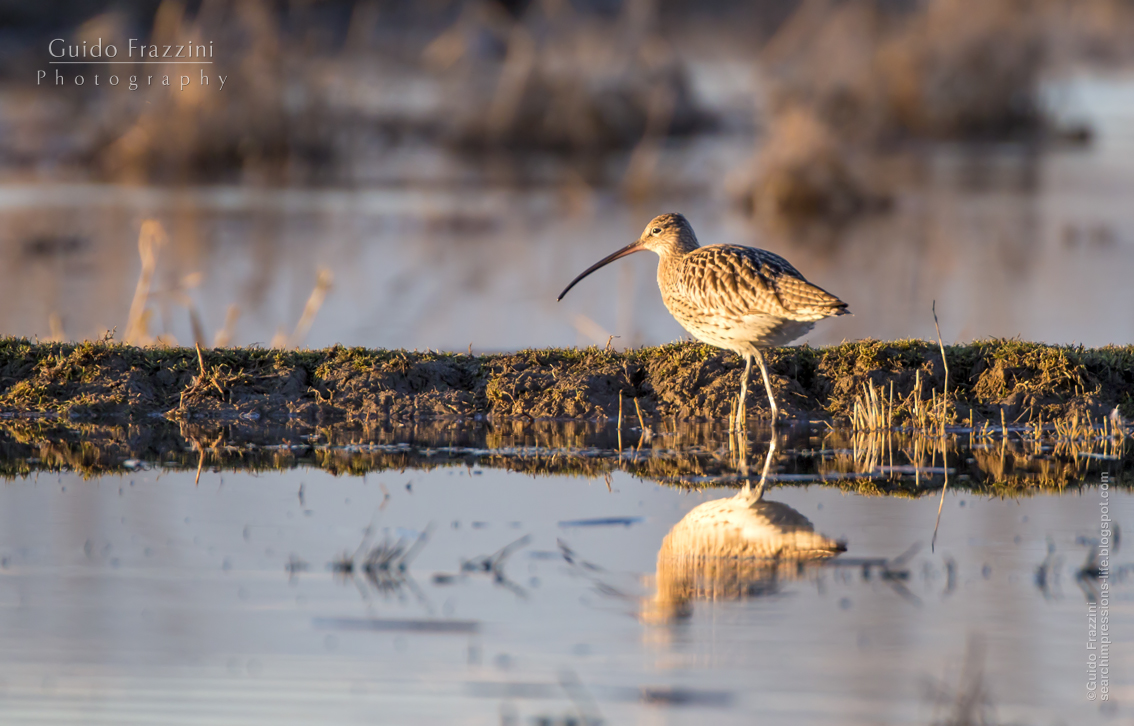
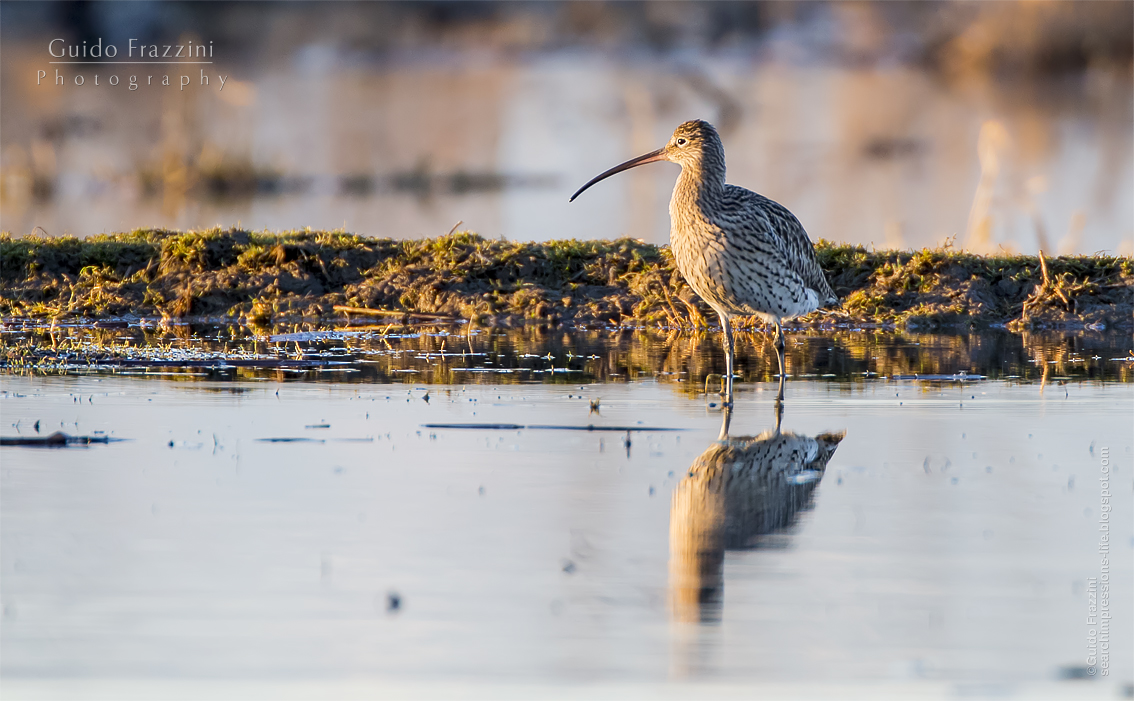
The day was not particularly great, still I was able to see a few species for the first time: the Hawfinch, the Curlew, the Eurasian penduline tit and the Brambling. In particular, the Curlew was something I wanted to capture in a photo, but unfortunately they never got close enough for a good shot. I had to crop quite a bit and that didn't help to have pictures with a good definition. However, the light of the sunset was really nice and gave a warm touch to the images I took.


             800mm f/8.0 1/800sec ISO 640 +1


             800mm f/8.0 1/1250sec ISO 640 +1


             800mm f/8.0 1/1000sec ISO 640 +1


             800mm f/8.0 1/800sec ISO 640 +1


             800mm f/8.0 1/1250sec ISO 640 +1


             560mm f/5.6 1/640sec ISO 800 +1


             560mm f/5.6 1/500sec ISO 800 +1


             800mm f/8.0 1/640sec ISO 800 +1


             560mm f/5.6 1/400sec ISO 800 +1


             800mm f/8.0 1/250sec ISO 800 +1